
Stewards of Change: Kate A. Larsen on the Human Cost of Fashion
An interview with
Kate A. Larsen : founder of SupplyESChange for Environmental and Social Change in supply chains, is a seasoned human-rights and sustainability operator whose work runs through most of the major fashion and apparel brands and retailers. An experienced supply-chain specialist, she spent 11 years living and working in China, leading Asia-wide ethical trade and ESG in one of her roles.

A Diagnostic Capsule
This editorial is a diagnostic capsule drawn from ARRA™'s "Custodianship and Stewardship" stream, capturing our commitment to designing regenerative infrastructure and system-level change. Further Education students, professionals, and senior leaders will find here both ground-level realities and strategic imperatives that define ethical progress in fashion systems.
Key terms : "UN Guiding Principles" refer to global business and human rights standards, "due diligence" means active responsibility and checking, "living wage" is the income workers need for a decent life.

The Worker Who Changed the Brief
Kate A. Larsen doesn't speak in abstractions. Her years spent walking factory floors - where many brands only visit in narratives - give her an unusual clarity. She names herself steward, not guardian or custodian; it's work rooted in the present, not nostalgia or distant dreams. For Larsen, stewardship means solving the problems that make 2050 targets irrelevant if ignored this decade.
The moment that shaped her ethic was not in a policy briefing but in a laundry in China: A Chinese worker, allowed to see his child once a year, looked her in the eye and indicted the business model. "Western brands could do better." If they paid suppliers fairly, on realistic lead times and terms. Shame, in that instant, became a brief – and a catalyst for action.
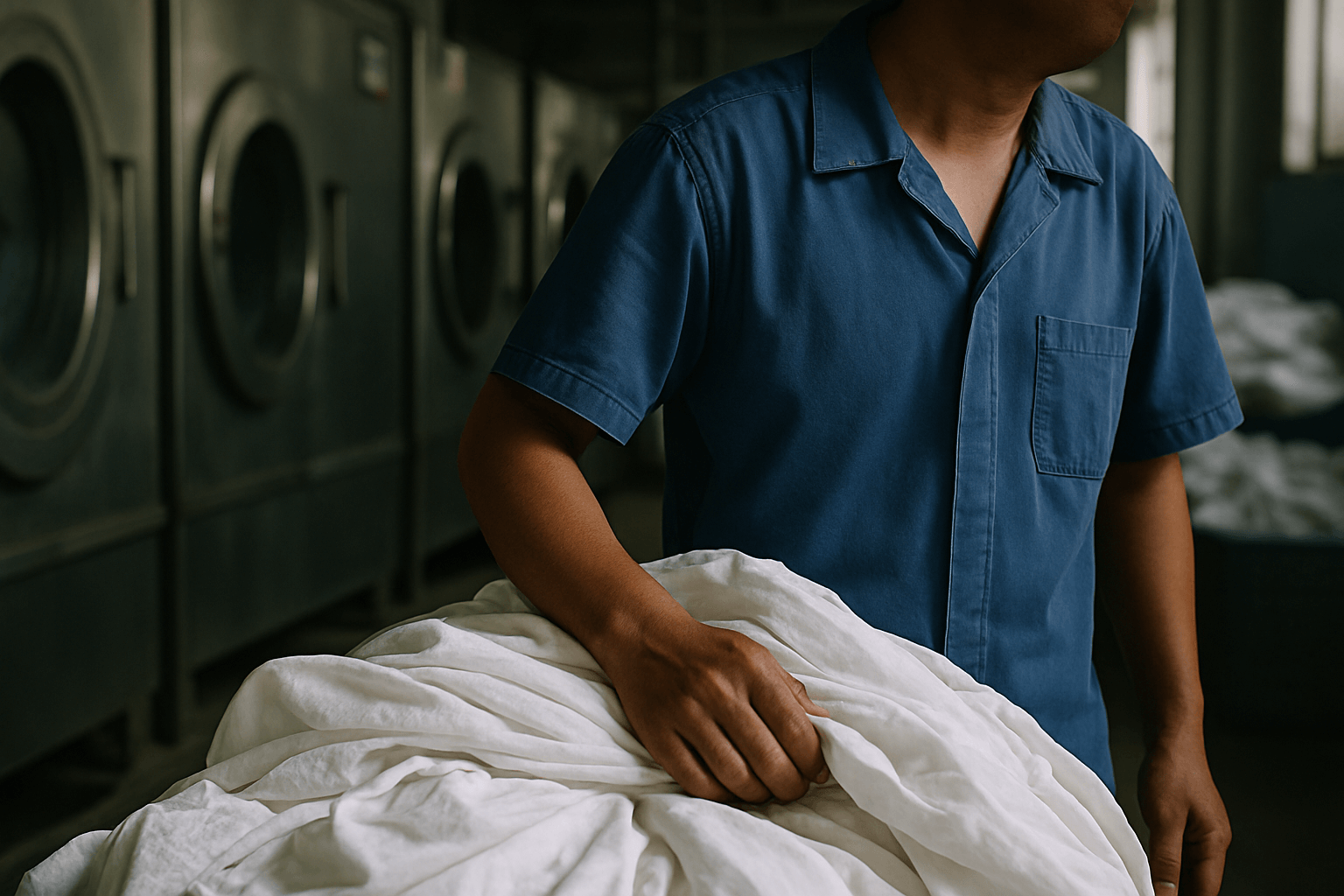
"Western brands could do better. If they paid suppliers fairly, on realistic lead times and terms."
When Climate Walks Into the Factory
In every supply chain region - from South Asia to Eastern Europe - the only true constant is that workers are underpaid, often below legal minimums. Legal definitions aside, a living wage is rarely seen, except in isolated pockets (parts of France, Italy, maybe Japan).
COVID made those abuses impossible to ignore, as brands unethically cancelled orders for goods they had already commissioned: fabric and trims bought, expensive logos sewn in, swing tags attached, product logo-packaged and stacked in shipping containers, leaving factories and the workers behind them unpaid.
Climate change now invades every factory shift. Larsen has seen workers faint in 35-degree heat, with 40 degrees now recurring in Cambodia, Bangladesh, Pakistan, Vietnam, and India. The spiral - heat erodes earnings, which crushes nutrition, which derails resilience - means climate disruption is no longer theoretical. Rural migration into city factories pushes labour supply higher, wages lower. This is not futurism, it's the pay packet now.
For students: this reveals "supply chain risk" not as a spreadsheet term, but as families in crisis.
Power, Racism and Wage Gaps
Boardrooms hold real power. Sustainability teams, however well-intentioned, are structurally outgunned until law and purchasing rules change. For professionals: invisible barriers, often racism, mean brown workers are silently classified as "other" - just cogs, not fully human. The racism, combined with the greed of senior fashion brand executives, fuels wage gaps and unsafe conditions across the supply chain.
Legislative trends are shifting, too. The UN Guiding Principles on Business and Human Rights, and the wave of EU "due diligence" laws and other legislation drawing from them, aim to force businesses to take real responsibility. In that context, a jargon fix is overdue: "audit" can no longer mean a thin, tick-box review, but robust, trustworthy checking that centres confidential worker voice and becomes one tool in a wider toolbox that companies can use with human-rights experts to do genuine due diligence and begin to rebalance supply-chain wealth more fairly - the point at which scrutiny actually touches how workers live.
"The racism, combined with the greed of senior fashion brand executives, fuels wage gaps and unsafe conditions across the supply chain."
What Future Talent Can Refuse
Gender stories run deep. Larsen describes how young women across Asia are pulled from school and put into garment and fashion factories, not to empower themselves, but to fund their brothers' education, stitching other people's futures for slave wages. This means that so-called "women's empowerment" programmes some brands have undertaken in fashion supply chains are already too late, intervening after opportunity has been quietly distributed elsewhere. Campaigns about women's leadership arrive at the end of the story, after the crucial years of education have been lost.
For students and talent, Larsen says, don't fall for the lone-saviour myth. Join groups - Fashion Revolution, labour orgs, environmental activists - and apply your urgency as a collective. The greatest change comes when tomorrow's talent refuses to lend energy to unethical employers. C-suite beware: the best people walk if you default to the old roadmap.
The System is the Message
For ARRA™, documenting Kate Larsen's diagnostic lens is not just journalism - it's the architecture of consequence. Her stubborn focus on wages, heat, law, and migration is a live system lesson for everyone from Further Education to boardroom. Fashion's future literacy is not just about style - it's about knowing what endurance, ethics, and human systems truly require.
"Fashion's future literacy is not just about style - it's about knowing what endurance, ethics, and human systems truly require."
Interview and editorial: Arra and Partners (SRCD) Ltd
Kate A. Larsen - Human Rights & Labour Advocate, Fashion Supply Chain Expert

